The benefits of prioritising reuse go beyond protecting the planet's resources. Reuse and repair social enterprises also offer ways to address social exclusion and poverty by creating employment opportunities.



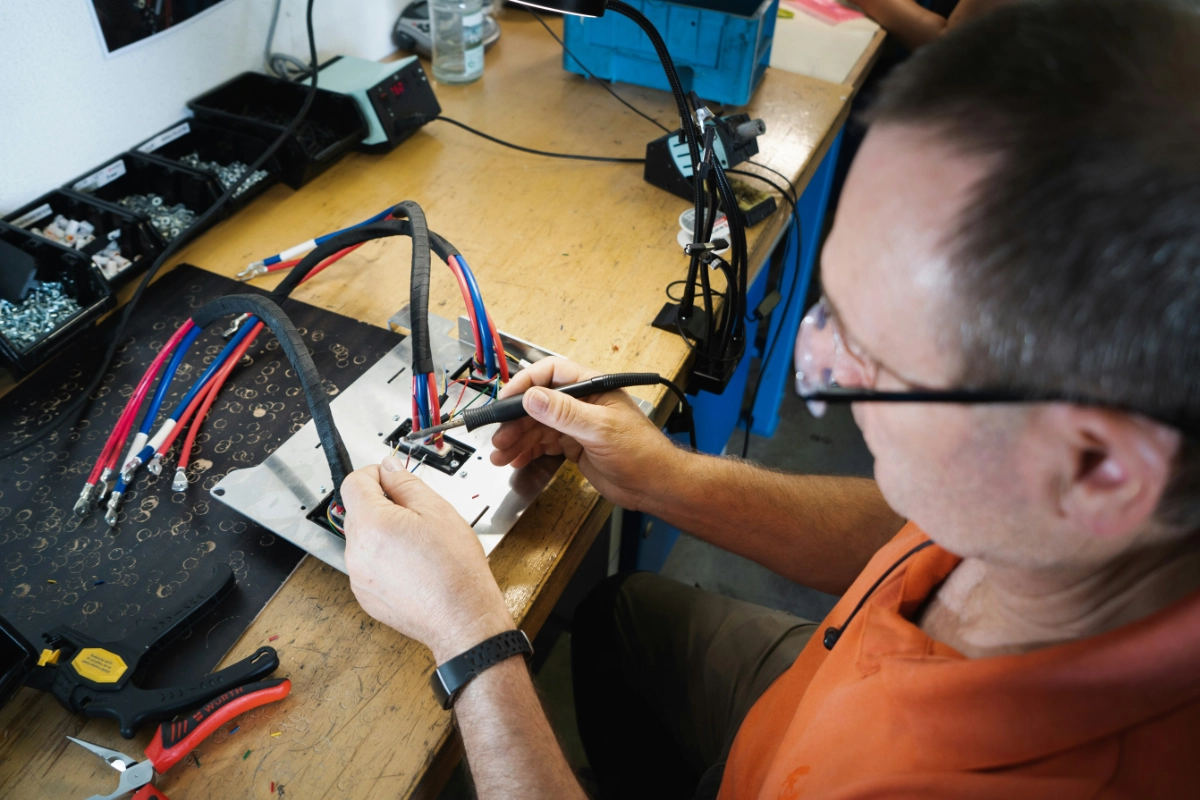
The benefits of prioritising reuse go beyond protecting the planet's resources. Reuse and repair social enterprises also offer ways to address social exclusion and poverty by creating employment opportunities. Social enterprises in reuse and repair are a significant source of employment for people struggling to find jobs, as expanding the lifespan of products is typically labour-intensive. These activities involve the reception of goods (identification, first quality checks, sorting), storage and logistics (adequate transport and handling, dismantling, and storage of surplus merchandise), and restoration (dismantling, cleaning, repair, functionality checks).
Data from RREUSE show that social enterprises focused on reuse generate around 70 jobs per 1,000 tonnes collected for reuse. In preparation for the reuse of Waste Electrical and Electronic Equipment (WEEE), which involves collection, transportation, storage, repair, and sale of electronic devices, employment creation can range from 60 to 140 jobs per 1,000 tonnes, depending on the product type, workforce, technology, and market growth.
Several initiatives across Europe show how social enterprises are fostering employment within the reuse sector:
Governments are increasingly acknowledging the role of reuse enterprises in employment creation. The Dutch Ministry of Social Affairs and Employment has highlighted the role of second-hand shops as essential for low-income communities, providing affordable goods while simultaneously creating job opportunities for disadvantaged individuals.
These social enterprises generate jobs and foster social inclusion, economic resilience, and environmental responsibility, making them essential in a reuse economy.
Social enterprises promoting reuse and employment face several challenges during their operations. At the Social & Circular: Thriving in 2050 conference, organised by RREUSE in October 2024, social enterprises, policymakers, and others gathered to discuss the crucial role of social enterprises in the transition to an inclusive and resource-efficient reuse economy.
One of the most critical barriers identified during the conference is how many initiatives rely on unstable or insufficient funding schemes. For example, the Austrian Repair Bonus Initiative reimburses citizens for repairing electronics but struggles with financial sustainability. Matthias Neitsch, President of Reuse Austria and RREUSE, emphasised that while these incentives are essential for boosting repair and reuse, they require stronger and more consistent EU-wide support to remain viable. Relevant organisations call for more ambitious EU-wide reuse targets that genuinely reduce waste while expanding employment opportunities in the reuse economy.
Reuse Austria emphasised that overproduction and excessive consumption continue to delay the growth of a real reuse economy. The constant demand for new products clogs the system, outpacing the second-hand market and limiting opportunities for reuse-based employment. Circle Economy supported this point, adding that there should be a social shift towards well-being and systemic change to guarantee reuse becomes the norm. To counteract these barriers, Matthias Neitsch proposed taxing raw materials instead of labour to incentivise sustainable production and make repair-based jobs more competitive. Emmaüs Europe raised concerns that many policies prioritise recycling over reuse, although reuse is less energy-intensive and creates more jobs. She mentioned that upholding the waste hierarchy, which places reuse above recycling, is essential to building a strong social and circular economy. Envie in France reflected on this concern, mentioning that while France's AGEC law allocates 5% of Extended Producer Responsibility (EPR) funds to social enterprises, this remains insufficient to fully empower reuse and repair initiatives.
Digitalisation presents both opportunities and challenges for social enterprises in reuse. Many struggle to achieve the level of digital transformation they would need to scale their operations, mainly because of limited financial resources and a workforce with low digital skills. Aligning policy frameworks with the needs of these social enterprises is essential for overcoming these digital barriers. Second-hand shops play a crucial role in employment and providing affordable goods, but their ability to leverage digital tools is still a limitation. Social enterprises need better access to funding, training, and capacity-building initiatives to guarantee that digitalisation strengthens employment within the reuse economy.
The future of social enterprises lies in strengthening their economic and social role within a reuse economy. Social enterprises focused on reuse and repair require stronger policy support to scale their impact and stronger integration between social and environmental policies.
As waste levels continue to grow, social enterprises' efforts need to be supported by new policies to promote reuse and repair, sustainable investments for social actors, foster the demand for circular skills across sectors, and raise awareness. A policy brief by Interreg Europe provides an overview of EU initiatives and the introduction of various repair and reuse schemes in compliance with the EU Directives.
To survive long-term, these enterprises should integrate digital tools into their operations while maintaining their core mission: fostering inclusive employment. That means that digitalisation should be implemented without displacing human workers. Rather than automating roles out of existence, digital transformation should improve worker efficiency and create new employment opportunities. AI and digital platforms must be designed to support, not replace, reuse-based employment models, assist workers in their tasks, provide training opportunities, and open pathways to new job roles.
Social enterprises play a vital role in making Europe's reuse economy successful. If we prioritise reuse and repair initiatives, we create employment and support inclusivity among communities. Despite the wide range of case studies and examples with this focus at the core of their work, financial, legislative and behavioural barriers must be addressed to unlock their full potential.

Lorem Ipsum dolor sit amet, consectetur adipiscing elit. Nunc vulputate libero et velit interdum, ac aliquet odio mattis.
Lorem Ipsum dolor sit amet, consectetur adipiscing elit. Nunc vulputate libero et velit interdum, ac aliquet odio mattis.
Lorem Ipsum dolor sit amet, consectetur adipiscing elit. Nunc vulputate libero et velit interdum, ac aliquet odio mattis.


In Germany, reverse vending machines (RVM) have been a familiar part of everyday life since the 1990s, standing in supermarkets nationwide to take back the full range of drink containers, from refillable glass and PET bottles to single use cans and plastic.
As momentum builds across Europe for systems that prioritise reuse over single-use plastics, it’s vital to ask: who’s carrying the weight of this transition? Break Free From Plastic Europe partnered with Fairwork to explore this question, focusing on the experiences and rights of delivery workers—those on the frontlines of many emerging reuse models.
Sign up for the #WeChooseReuse newsletter and stay up-to-date with the latest reuse news from Europe and beyond.
No spam, ever. Unsubscribe any time.