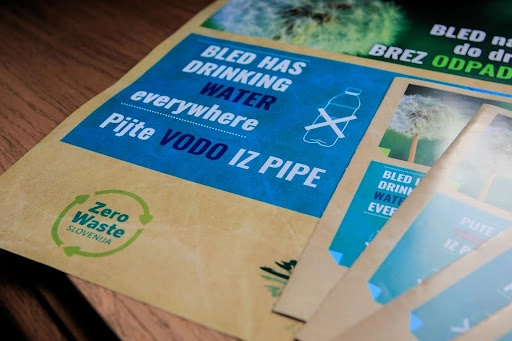
Reuse is one of the most effective waste prevention measures. We can do a lot on an individual level, and we can be even more successful if the local community helps us. We took a closer look at best practices that encourage reuse in Slovenian municipalities that have committed to zero waste journey.



Reuse is one of the most effective waste prevention measures. We can do a lot on an individual level, and we can be even more successful if the local community helps us. We took a closer look at best practices that encourage reuse in Slovenian municipalities that have committed to zero waste journey.
Disposable plastic products are flooding our roads and nature. If they are not recyclable, they are disruptive to waste management and their incineration pollutes the atmosphere. The endless wave of plastic waste does not only affect our environment, but also threatens human health. Therefore, about a quarter of all Slovenian municipalities have joined the initiative to reduce single use plastic on public and internal events organized by municipalities (not all are from zero waste cities network). In this way single use items like plastic plates, cups and cutlery are replaced by reusable ones (glass, ceramics, metal, reusable and washable plastics…). At the same time the municipalities are setting a good example for others to follow and raising awareness about responsible event organization through:
One of the biggest challenges are containers for take away food as they are single use items although some packaging materials are being promoted as compostable (usually for industrial composting). But who can assure that the packaging is properly disposed of after the use? Plus there is still lots of confusion when it comes to biodegradable packaging and its composting characteristics (but so-called “bioplastics” won’t solve the plastic pollution problem).
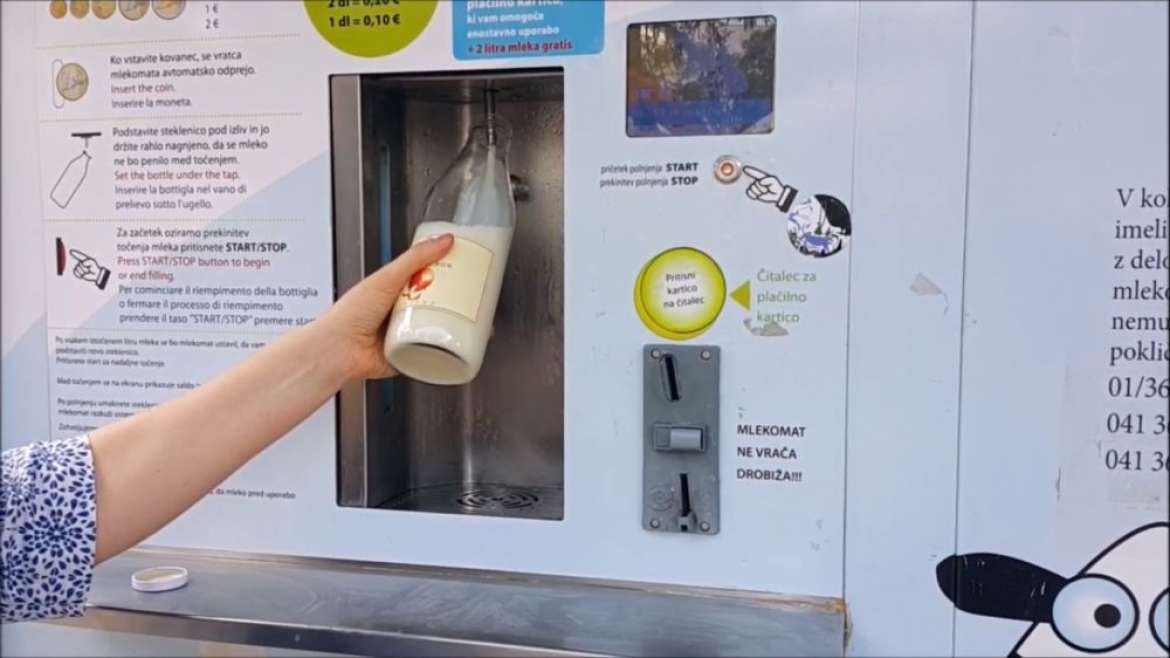
Slowly zero waste or refill shops are popping up in Slovenia and some commercial brands are following these trends. Aim is to cut out any unnecessary or wasteful packaging by storing products in large containers or vending machines. Interesting thing is that the popularity of milk vending machines is increasing again and it makes more sense now than ever, as a way to support farmers, reduce waste and get a higher quality product.
Every community should also have a REUSE center where second-hand items could be bought and repaired. Usually they are run as social enterprises and their priority is to encourage and promote the reuse of already applied products, carrying out upcycling products and transforming them into new unique masterpieces. However, some centers go a step further and build their own brand, such as Depo reuse center in Vrhnika, where bags are sewn from seat belts, airbags, sailboats or ski jumpers' jerseys.
Very active in reuse area is non-profit organization ZEOS which promotes the reuse of “still to be used” appliances (eg. washing machine, refrigerator, freezer, desktop and laptop computer, small household appliances, toys, mobile phones, speakers etc.) across the country with corners for items collection,repair and sale. Another form of reuse happening in our communities are different kinds of swaps of textile, toys, school accessories and also plants.
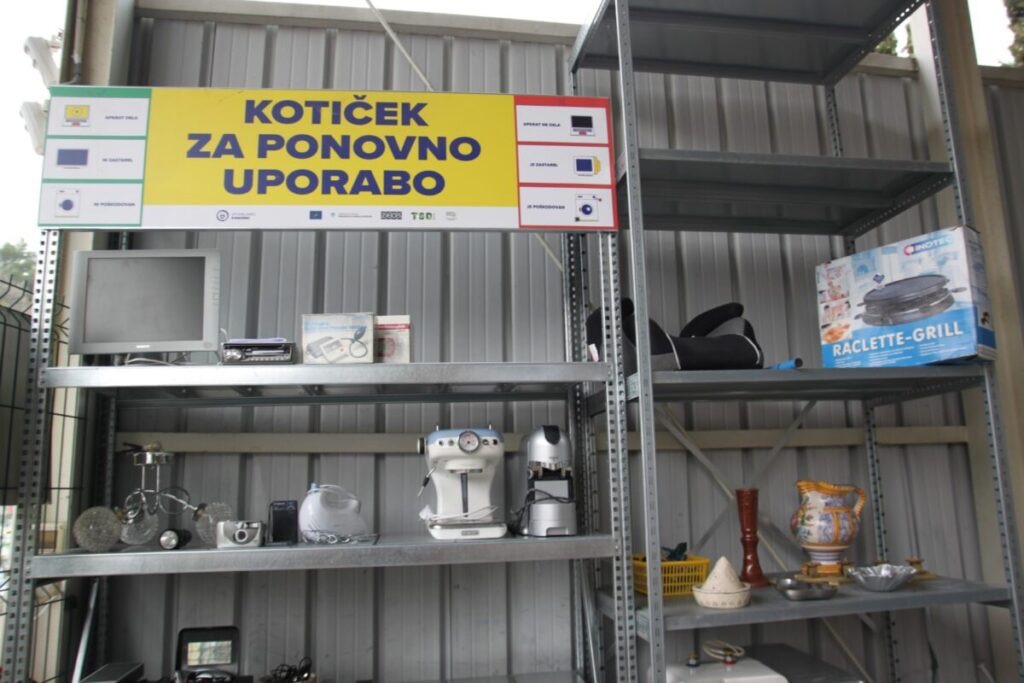
In addition, libraries of things popped up in recent years where locals can borrow a wide variety of items, like machines and tools for gardening or barbecue grill. They operate on the same principle as regular libraries, except that users borrow different items instead of books. Their added value is that they are an environmentally friendly alternative to mass consumption (they contribute to less waste and less consumption of natural resources).
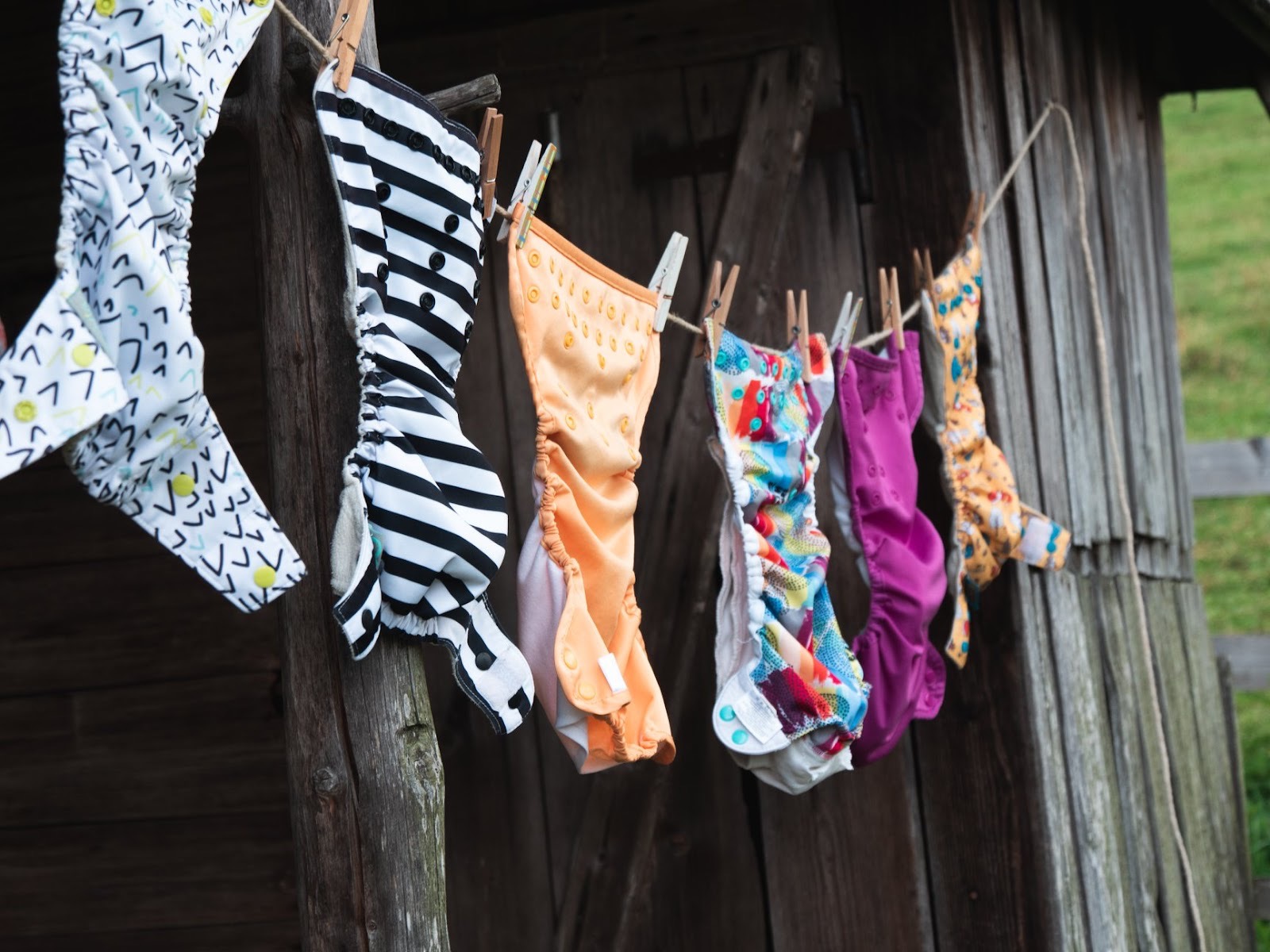
Our favourite practice is washable diapers which are a perfect example of how we can minimize the quantities of residual waste (where diapers and other hygiene products end up). In the Vrhnika kindergarten, they were among the first to test washable diapers in practice and prove that it makes environmental and economic sense if disposable nappies are replaced with washable ones. More about their sustainable practices please check in the video.
We have also established a Slovenian online platform Manjjeveč (Less is more) where people can find maps with zero waste shops/corners, second hand shops, repair masters, library of things and many more in one place.
Some Slovenian zero waste municipalities have already supported the European movement #WeChooseReuse. Other municipalities, individuals, organizations and companies that are already working for a world with less waste are also invited to support reuse systems (add the link).
Lorem Ipsum dolor sit amet, consectetur adipiscing elit. Nunc vulputate libero et velit interdum, ac aliquet odio mattis.
Lorem Ipsum dolor sit amet, consectetur adipiscing elit. Nunc vulputate libero et velit interdum, ac aliquet odio mattis.
Lorem Ipsum dolor sit amet, consectetur adipiscing elit. Nunc vulputate libero et velit interdum, ac aliquet odio mattis.


Reuse is one of the most effective waste prevention measures. We can do a lot on an individual level, and we can be even more successful if the local community helps us. We took a closer look at best practices that encourage reuse in Slovenian municipalities that have committed to zero waste journey.
A reuse economy needs support from strong legislation, and the WEEE Directive can play a crucial role in achieving this. However, some steps must be taken to support true resource efficiency and equitable access to reuse opportunities.
Sign up for the #WeChooseReuse newsletter and stay up-to-date with the latest reuse news from Europe and beyond.
No spam, ever. Unsubscribe any time.